
Roz Wallis
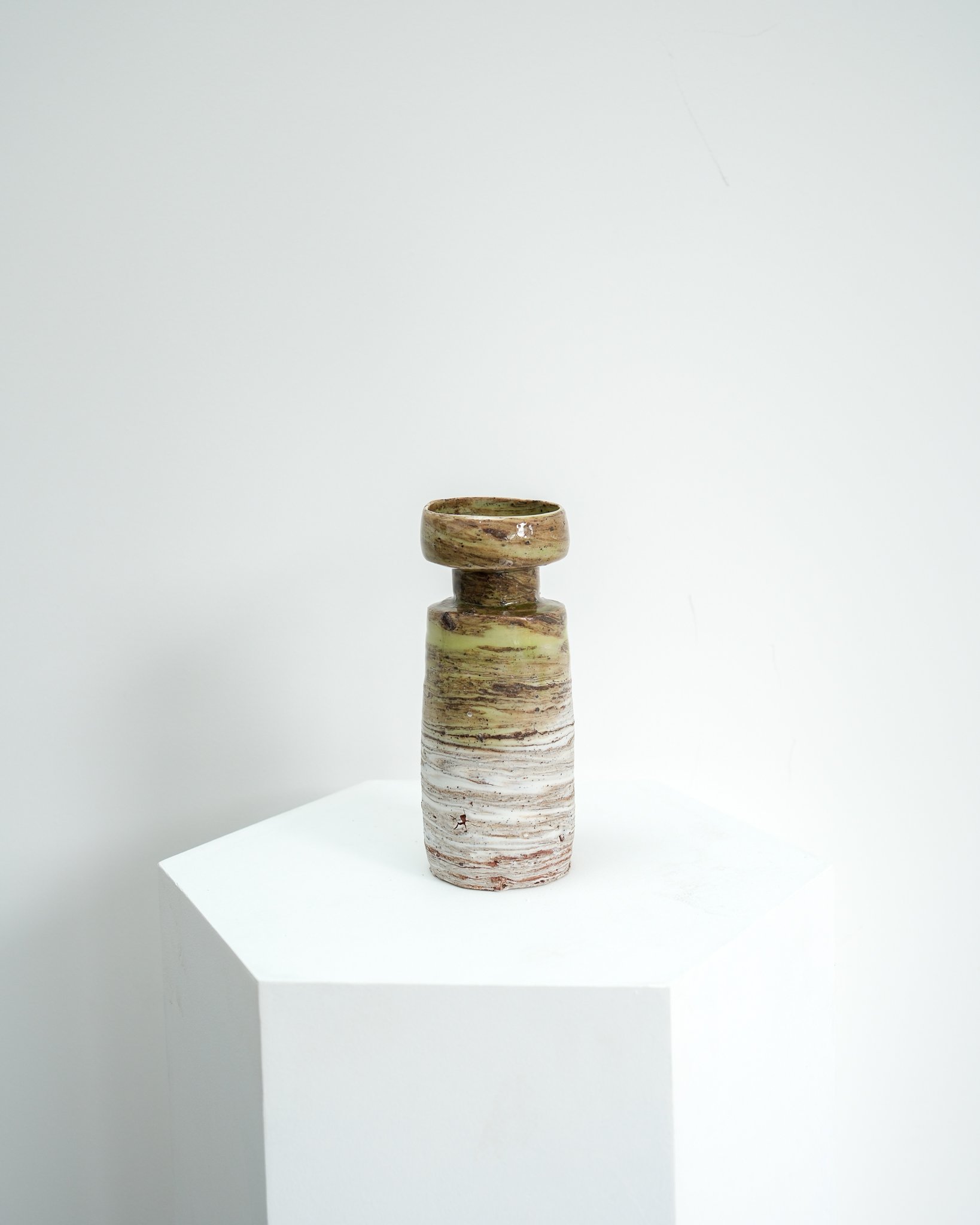
Inspired by the sculptural forms of Hans Coper, Thames Strata II is thrown from alternating layers of porcelain and wild Thames clay, creating distinctive bands that run throughout the vessel. The Thames clay was hand-dug from the riverbed and left unfiltered, allowing stones and natural inclusions to remain. These impurities become an integral part of the work, lending a rich, earthy texture and a direct connection to the landscape from which the clay came.
A soft green glaze is applied only to the upper third of the vessel, echoing moss, lichen and weathered stone, while the unglazed lower section reveals the raw strata of the layered clays beneath. This contrast celebrates both the refined qualities of porcelain and the rugged character of the wild Thames clay.
Although perfectly straight when it entered the kiln, the differing shrinkage rates of the two clays, together with the natural inclusions, caused the form to shift during firing. The resulting gentle movement gives the vessel its distinctive, organic profile—a reminder that the materials themselves play an active role in shaping the final piece
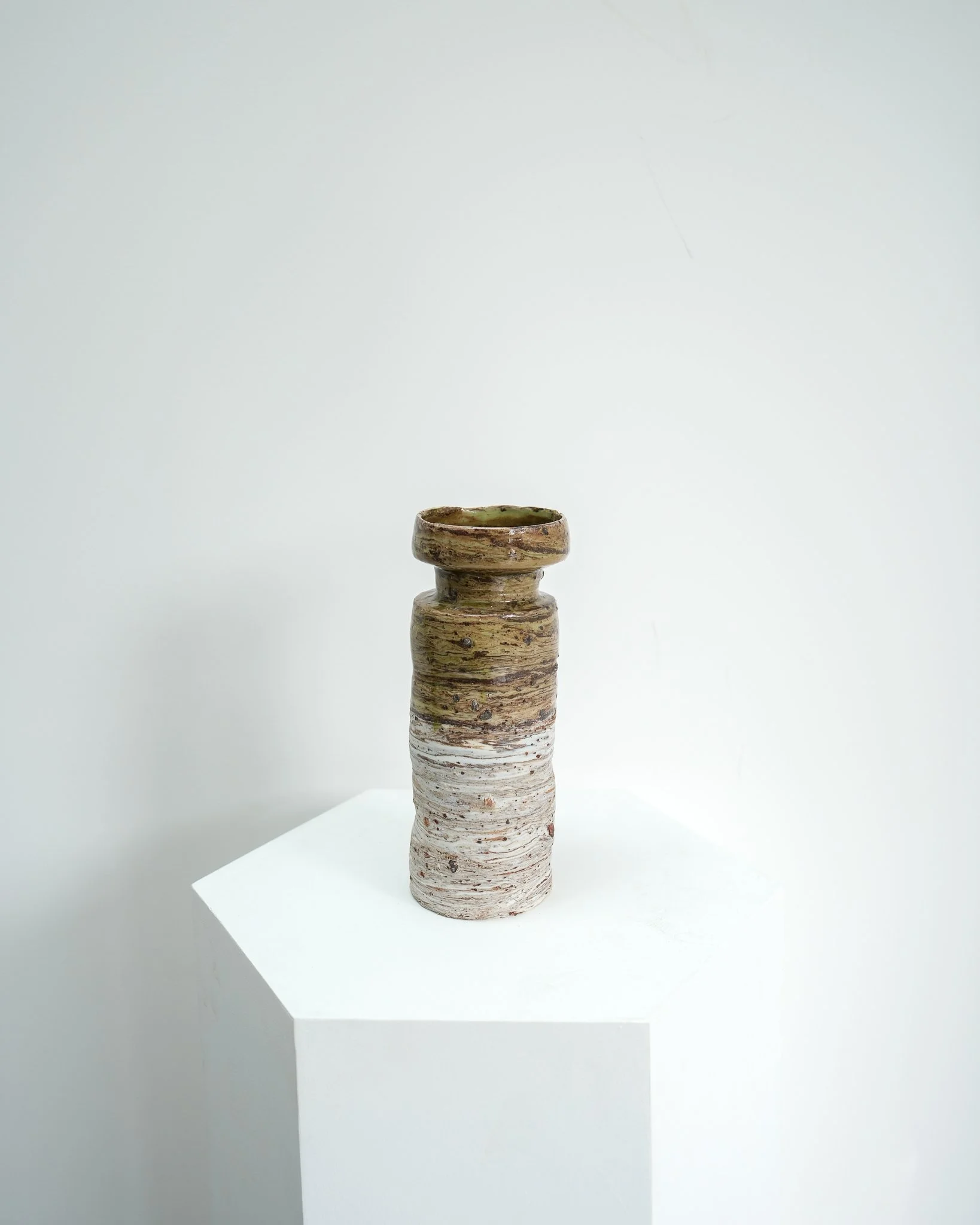
Inspired by the sculptural forms of Hans Coper,Thames Strata I is thrown from alternating layers of porcelain and wild Thames clay, creating distinctive bands that run throughout the vessel. The Thames clay was hand-dug from the riverbed and left unfiltered, allowing stones and natural inclusions to remain. These impurities become an integral part of the work, lending a rich, earthy texture and a direct connection to the landscape from which the clay came.
A soft green glaze is applied only to the upper third of the vessel, echoing moss, lichen and weathered stone, while the unglazed lower section reveals the raw strata of the layered clays beneath. This contrast celebrates both the refined qualities of porcelain and the rugged character of the wild Thames clay.
Although perfectly straight when it entered the kiln, the differing shrinkage rates of the two clays, together with the natural inclusions, caused the form to shift during firing. The resulting gentle movement gives the vessel its distinctive, organic profile—a reminder that the materials themselves play an active role in shaping the final piece
SOLD
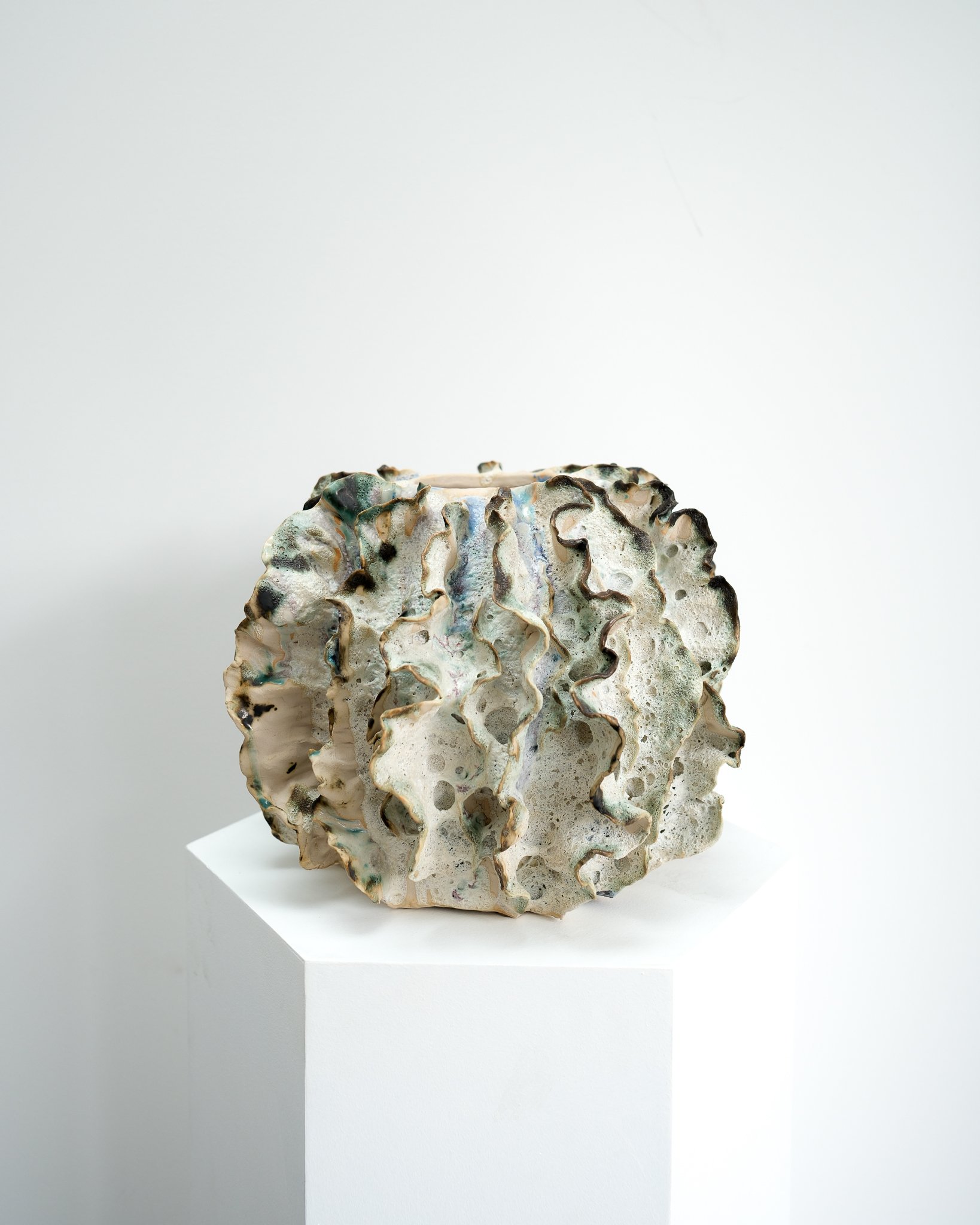
Inspired by the organic forms of the shoreline, The Sea Urchin explores the sculptural possibilities of clay through layers of folds, texture, glazes and glass. Its richly tactile surface echoes the weathered textures of shells, coral and sea life, while subtle washes of oxides and glaze evoke the colours of the coast. Balancing strength with fragility, the vessel invites close inspection, revealing crevices, colour and unexpected details shaped by hand and fire.
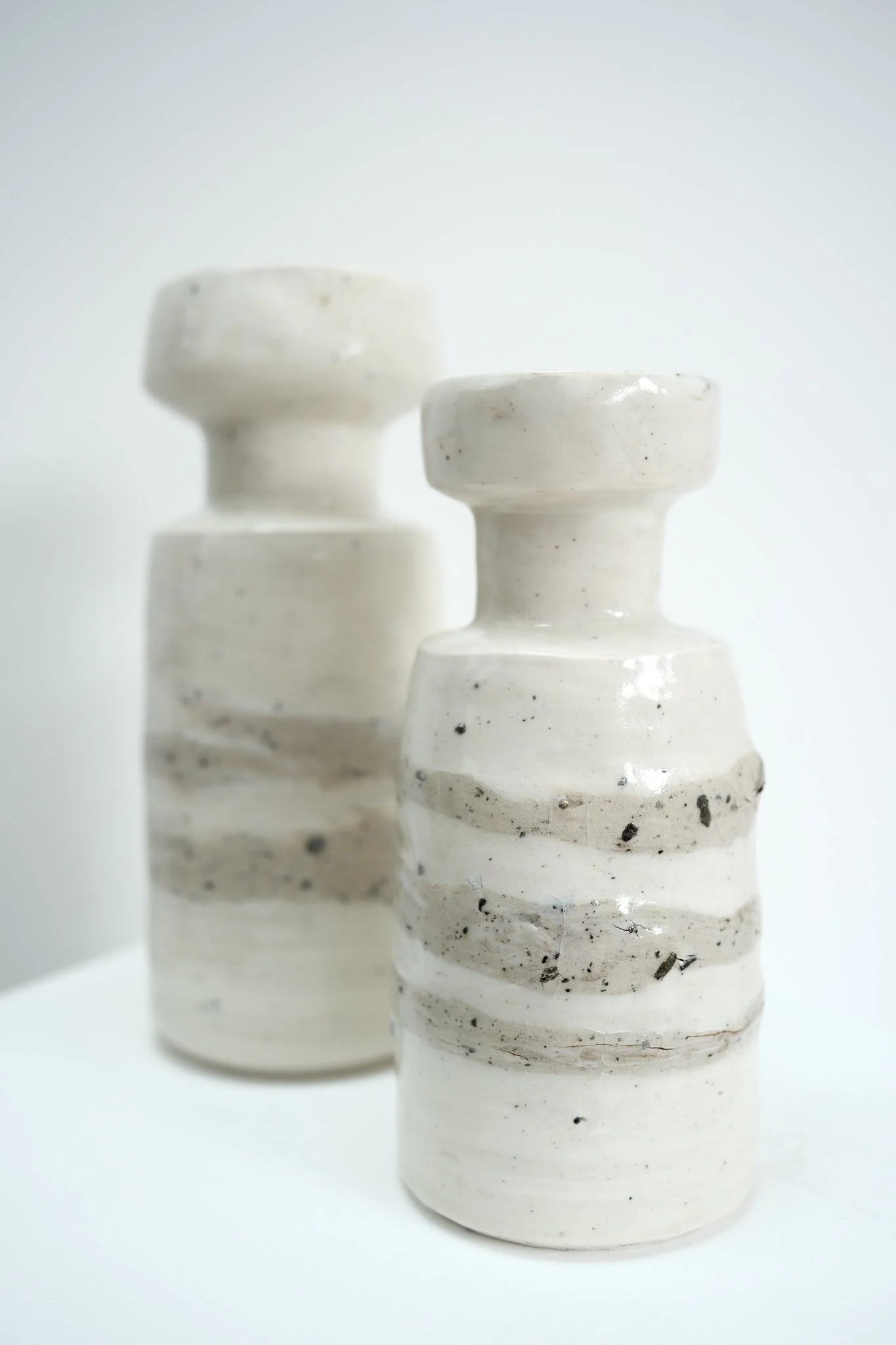
Common Ground 1 & 2 are part of an ongoing body of work entitled The Thames Series. Hand thrown porcelain with unfiltered wild Thames clay. Inspired by the shapes of Hans Coper, these vessels explore the dialogue between refined porcelain and raw clay, gathered from the bed of the River Thames. The national inclusions within the wild clay create unique geological bands, making each piece a record of both landscape and process. Both contemporary and timeless, the work celebrates place, process and the quiet beauty found in natural imperfection.
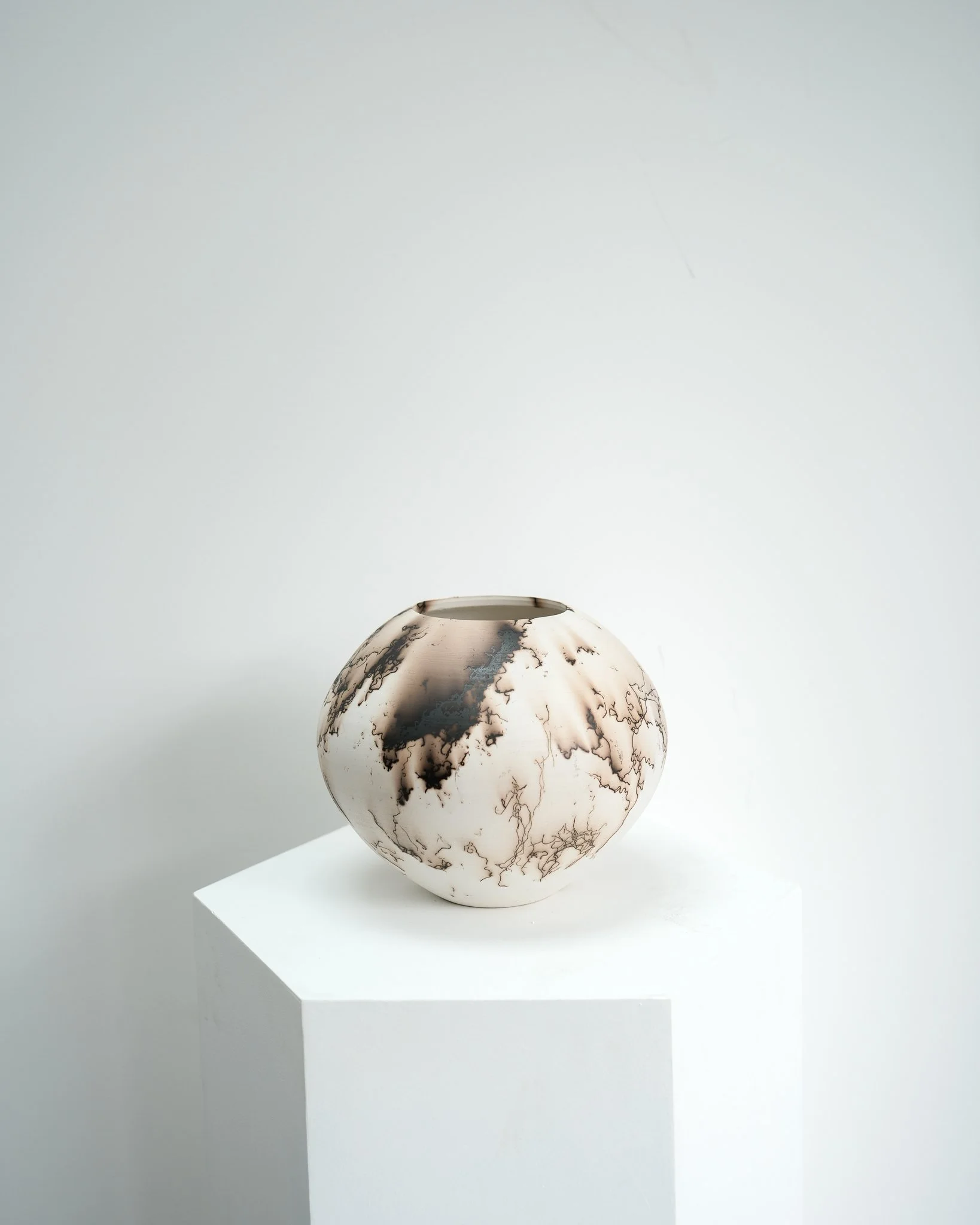
A contemporary interpretation of the traditional moon jar, this hand-thrown vessel is transformed through the unpredictable process of horsehair raku firing. While still glowing hot from the kiln, strands of horsehair are laid onto the surface, where they instantly combust, leaving delicate carbon tracings that can never be repeated.
The fine, smoke-drawn lines flow organically across the softly rounded form, evoking river systems, root networks and imagined landscapes. Balancing chance with careful craftsmanship, each mark records a fleeting moment, making every vessel entirely unique.
Quiet, tactile and sculptural, this piece explores the relationship between control and spontaneity, celebrating the beauty that emerges when fire, smoke and material are allowed to collaborate
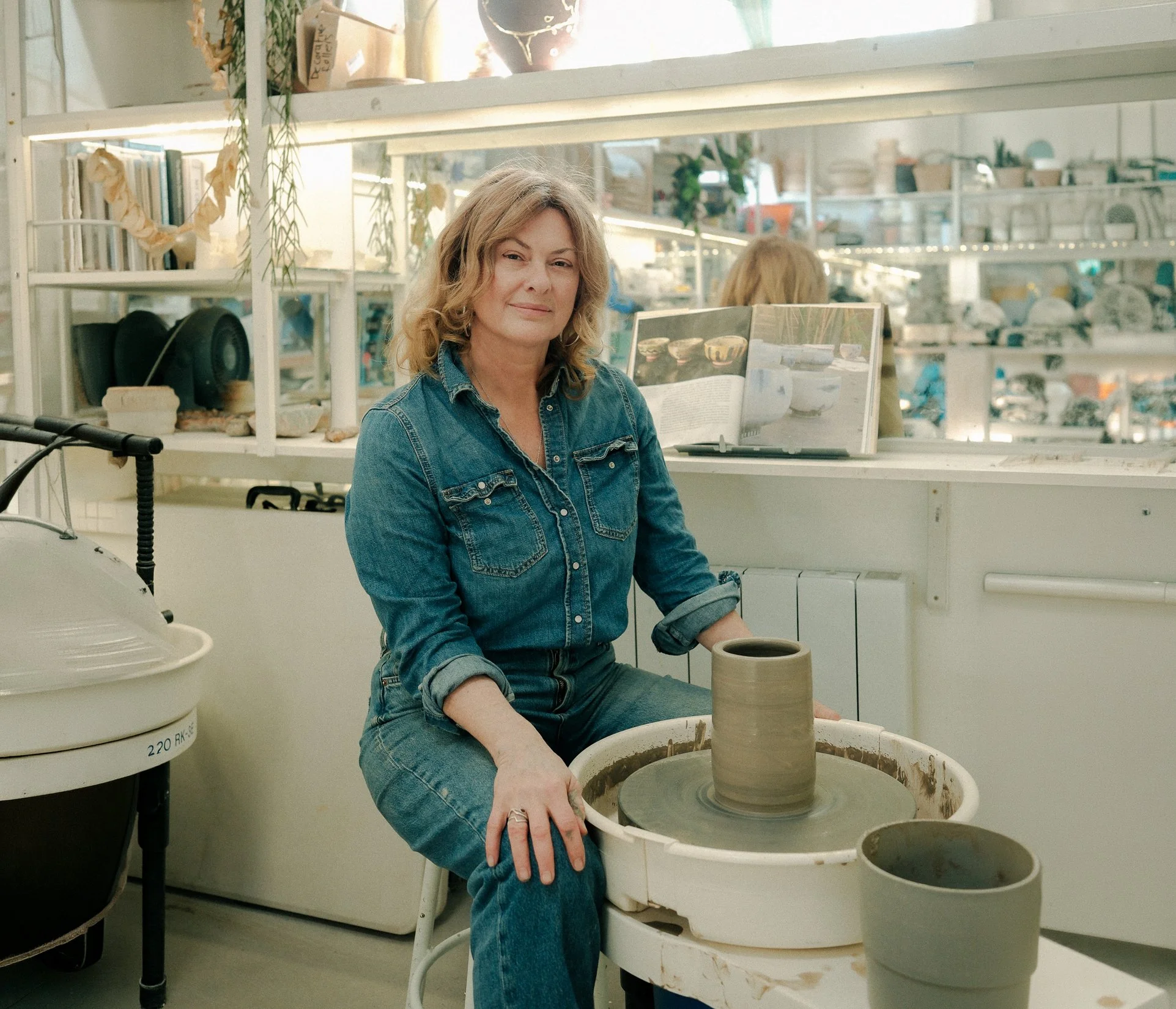
About Roz
Roz Wallis is a ceramic artist based in West London, working across form and surface through varied clay bodies and firing processes. She is the founder of Chiswick Art School’s ceramics department and ChiswickPots Studios, where she teaches and supports a wide community of makers.
Inspired by the sculptural forms of Hans Coper, Sussex Strata is thrown from alternating layers of porcelain and wild Thames clay, creating distinctive bands that run throughout the vessel. The Sussex clay was hand-dug from the River Medway riverbed in Forest Row, Sussex and left unfiltered, allowing stones and natural inclusions to remain. These impurities become an integral part of the work, lending a rich, earthy texture and a direct connection to the landscape from which the clay came.
A soft green glaze is applied only to the upper third of the vessel, echoing moss, lichen and weathered stone, while the unglazed lower section reveals the raw strata of the layered clays beneath. This contrast celebrates both the refined qualities of porcelain and the rugged character of the wild Thames clay.
Although perfectly straight when it entered the kiln, the differing shrinkage rates of the two clays, together with the natural inclusions, caused the form to shift during firing. The resulting gentle movement gives the vessel its distinctive, organic profile—a reminder that the materials themselves play an active role in shaping the final piece